
Introduction
In this guide, you’ll learn practical ways to reduce return fraud in WooCommerce without creating a frustrating customer experience. Returns are part of running an online store. Customers order the wrong size, receive damaged products, or simply change their minds.
But there’s another side of returns that many store owners eventually face — return fraud.
A customer claims an item never arrived, returns a different product, requests multiple refunds, or repeatedly abuses return policies.
At first, these cases seem small. But over time, return fraud can quietly reduce profit, increase support workload, and create unnecessary stress for your team.
The good news? You don’t need to make your return policy strict or unfriendly to reduce fraud.
Let’s look at practical ways to reduce return fraud in WooCommerce while still keeping customers happy.
Table of Contents
🤔 What Is Return Fraud?
Return fraud happens when customers misuse your return process to gain money, products, or store credit unfairly.
Some common examples include:
- Returning used items as new
- Claiming products were damaged when they weren’t
- Returning a different product
- Requesting refunds repeatedly
- Filing duplicate return requests
- Exchanging products excessively
Not every return request is fraudulent—but having no process makes fraud easier.
🚩 Signs Your Store May Have a Return Fraud Problem
You may notice patterns like:
- Customers frequently requesting refunds
- Multiple return requests from the same account
- Missing product evidence
- Claims submitted long after delivery
- High exchange rates for certain products
- Refund requests without clear reasons
If this sounds familiar, it’s time to improve your return workflow.
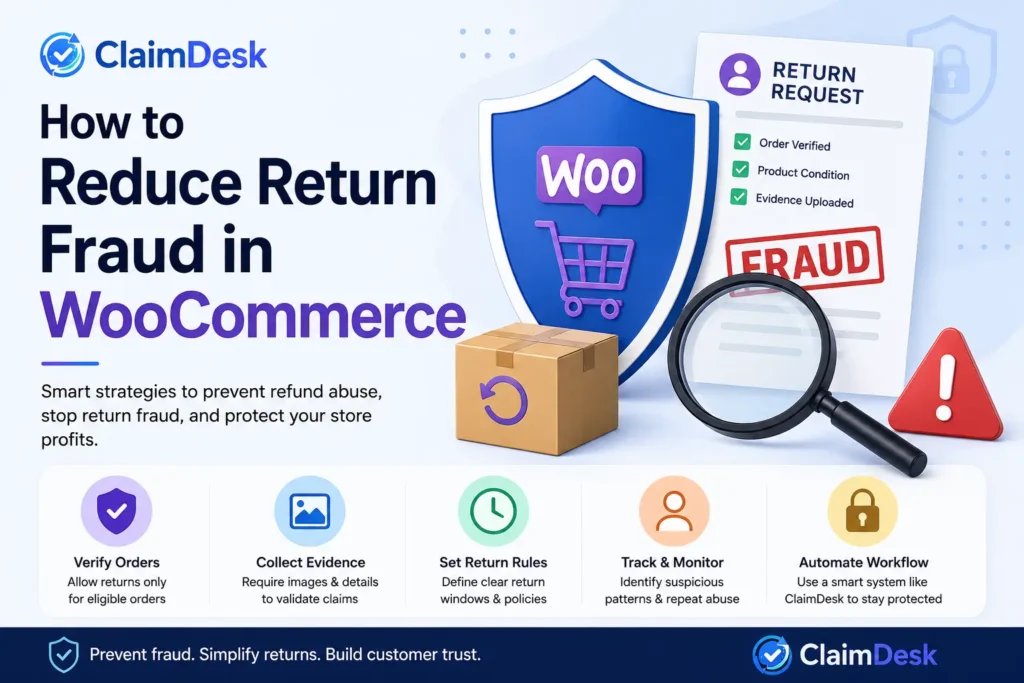
📋 Create a Structured Return Request Process
One of the biggest reasons fraud happens is because returns are managed manually.
Many stores still accept returns through:
- Social media messages
- Contact forms
This creates confusion and missing records.
Instead, create a structured process where customers submit return requests directly from their order.
A proper workflow should collect:
✅ Reason for return
✅ Product condition
✅ Description of the issue
✅ Supporting evidence
✅ Requested resolution
When customers know details are required, low-quality or fraudulent requests often decrease.
📷 Ask for Evidence Before Approving Claims
Images help verify claims quickly.
If a customer reports:
- damaged packaging
- defective products
- wrong item delivered
ask for supporting photos.
This helps:
- speed up reviews
- reduce disputes
- create documented records
- prevent false claims
Just make sure the upload process remains simple and customer-friendly.
⏰ Set a Clear Return Window
Unlimited returns can become difficult to manage.
Set a reasonable return period such as:
- 7 days
- 14 days
- 30 days
Clear deadlines reduce abuse and make expectations transparent.
Display your return policy clearly before and after purchase.
🔍 Track Claim History
One isolated return request usually isn’t a concern.
But patterns matter.
Pay attention to:
- repeated returns
- excessive exchanges
- refund frequency
- unusual customer behavior
Tracking history helps identify abuse without affecting genuine customers.
⚙️ Automate Your Return Workflow
Manual returns make it harder to maintain consistency.
With an automated workflow, you can:
- validate eligible orders
- track quantities
- collect required details
- review evidence
- manage claim status
- send automated updates
Automation reduces human error and creates accountability.
💡 How ClaimDesk Helps Reduce Return Fraud
ClaimDesk helps WooCommerce stores move away from scattered return handling and create a more controlled process.
With ClaimDesk, store owners can:
- Allow claims only from eligible completed orders
- Track claimable quantities
- Collect structured return information
- Request supporting images
- Configure claim windows
- Manage claims from one dashboard
- Track approval and rejection decisions
Instead of handling returns across emails and messages, everything stays organized inside WooCommerce.
🎯 Balance Protection with Customer Experience
Reducing return fraud doesn’t mean making returns difficult.
The goal is simple:
Make legitimate returns easy.
Make fraudulent returns harder.
Customers appreciate stores that have a clear and transparent process.
When expectations are clear and claims are organized, everyone benefits.
❓ Frequently Asked Questions
❓ Can WooCommerce prevent return fraud automatically?
WooCommerce provides order management but typically requires additional workflows or tools to create a structured return process.
❓ Should I require images for every return?
Not always. Evidence requirements work best for damaged, defective, or disputed claims.
❓ Will stricter return rules hurt customer experience?
Not if they are clear and reasonable. Transparency builds trust.
❓ How can I track return abuse?
Track claim history, quantities, claim reasons, and customer patterns over time.
🎉 Final Thoughts
If you’re looking to reduce return fraud in WooCommerce, creating a structured claims workflow is one of the most effective long-term solutions. Return fraud can become expensive if left unmanaged—but solving it doesn’t require making customers jump through hoops.
A clear return process, evidence collection, claim tracking, and better workflows can significantly reduce abuse while improving customer trust.
By creating a structured return experience inside WooCommerce, you protect your business and deliver a smoother post-purchase experience.
OR Looking for a complete WooCommerce returns workflow?